


Cornea & Keratoconus Care at Rajas Eye Hospital, Indore
What is the Cornea?
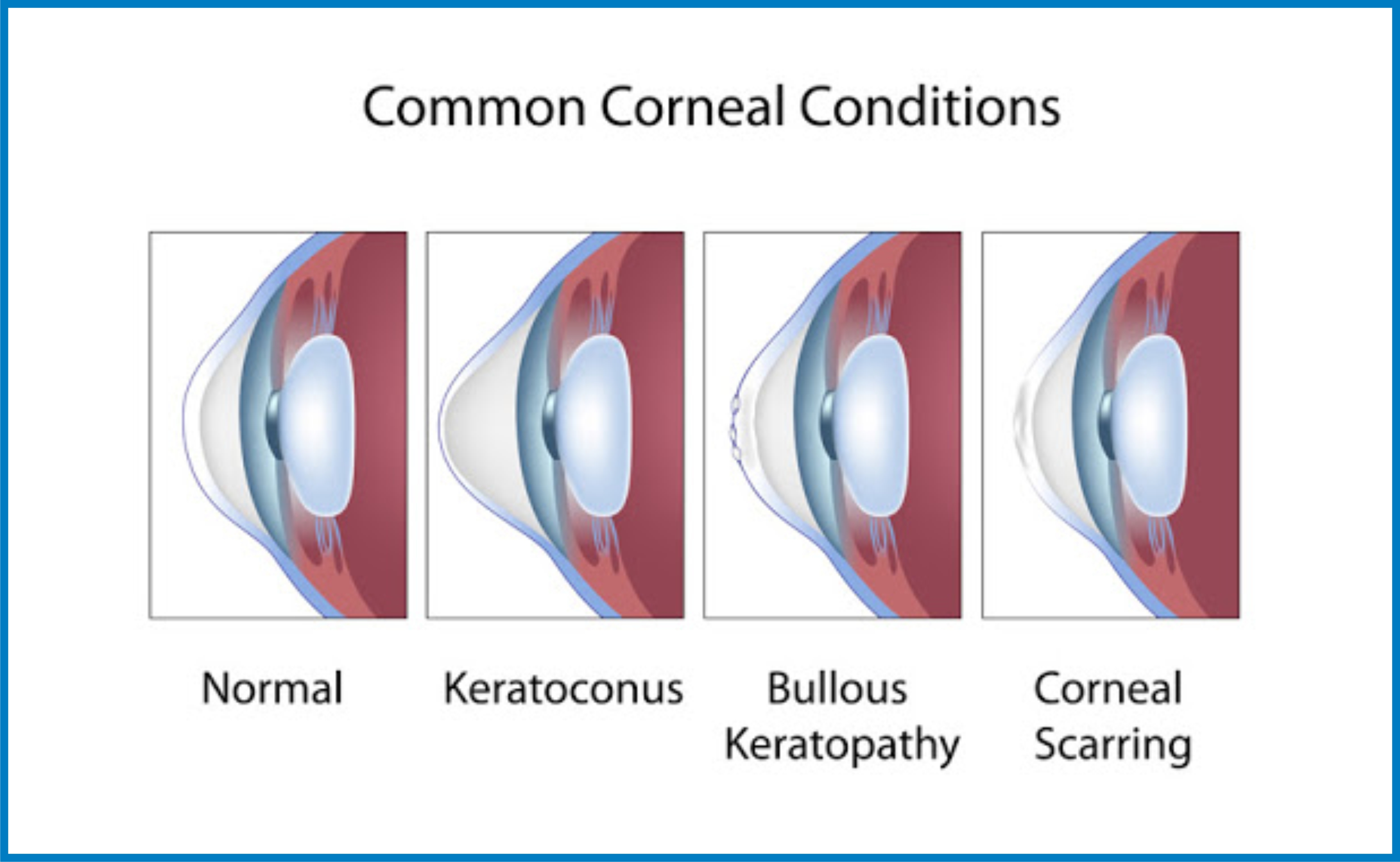
The cornea is the transparent, dome-shaped outermost layer of the eye that covers the iris and pupil. It acts like a window and plays a critical role in focusing light onto the retina, enabling clear vision. A healthy cornea is essential for optimal eyesight. Any damage, disease, or structural irregularity of the cornea can lead to blurred or distorted vision.
What is Keratoconus?
Keratoconus is a progressive eye disorder in which the normally round cornea becomes thin and begins to bulge outward into a cone shape. This irregular shape prevents light from focusing correctly on the retina, causing blurry or distorted vision. It often starts in adolescence or early adulthood and may progress slowly over years.
Symptoms of Keratoconus
Keratoconus may affect one or both eyes and can lead to:
- Blurred or distorted vision
- Increased sensitivity to light and glare
- Frequent changes in eyeglass prescription
- Difficulty seeing at night
- Ghosting or multiple images, especially when looking at lights
- Eye strain or headaches from squinting
Early detection is crucial to prevent progression and preserve vision.
Investigations to Detect Keratoconus
At Rajas Eye Hospital, we use the latest diagnostic tools for early detection of keratoconus:
- Corneal Topography – A 3D map of the curvature and shape of the cornea. It is the most important tool to detect keratoconus early.
- Pachymetry – Measures the thickness of the cornea.
- Keratometry – Measures the corneal curvature.
- OCT (Optical Coherence Tomography) – Provides high-resolution imaging of corneal layers.
- Slit-Lamp Examination – To look for specific signs like Fleischer’s ring and corneal thinning.
What is the Treatment for Keratoconus?
The treatment of keratoconus depends on the stage, severity, and progression of the disease. At Rajas Eye Hospital, Indore, we offer comprehensive care for all stages of keratoconus using the latest diagnostic tools and world-class treatment technologies.
1. Glasses or Soft Contact Lenses (For Early Stages)
- In the initial phase of keratoconus, when corneal distortion is mild, spectacles or soft contact lenses can correct the vision.
- This option is suitable when the cornea still retains a relatively regular shape.
2. Rigid Gas Permeable (RGP) or Scleral Contact Lenses (Moderate Stages)
- As the cornea becomes more irregular, RGP or scleral lenses provide a better visual outcome by vaulting over the distorted cornea and creating a new, smooth optical surface.
- These lenses can significantly enhance clarity and comfort in patients with moderate keratoconus.
3. Corneal Collagen Cross-Linking (C3R/CXL)
- A non-surgical and highly effective treatment to stop the progression of keratoconus.
- It involves applying riboflavin (Vitamin B2) eye drops and then activating them with UV-A light, which strengthens the corneal collagen fibers.
- At Rajas Eye Hospital, we use advanced FDA-approved cross-linking technology ensuring maximum safety and optimal outcomes.
4. Intracorneal Ring Segments (ICRS)
- Small, curved plastic implants are surgically inserted into the cornea to flatten its shape and improve vision.
- This minimally invasive procedure can reduce the need for corneal transplantation in select patients.
5. Corneal Transplant (Advanced Stages)
- In advanced keratoconus, when scarring or extreme thinning of the cornea affects vision significantly, a corneal transplant becomes necessary.
- We offer both partial-thickness (DALK) and full-thickness (PK) corneal transplantation performed by our experienced corneal surgeons using modern microsurgical techniques.
Frequently Asked Questions (FAQs)
- Can keratoconus be cured?
No, but its progression can be stopped or slowed with treatments like C3R, and vision can be improved with lenses or surgery. - Is keratoconus genetic?
Yes, it can run in families. If you have a family history, regular eye exams are advised. - Is C3R painful?
C3R is a painless procedure performed under numbing eye drops. - Can keratoconus affect both eyes?
Yes, it often affects both eyes, though the severity can differ. - Will I need a corneal transplant?
Only in advanced cases where other treatments don’t work. - Can children have keratoconus?
Yes, early-onset keratoconus is possible and often progresses faster in children. - How long is the recovery after C3R?
Most people resume normal activities in a few days. Vision may take a few weeks to stabilize. - What is the success rate of keratoconus treatment?
With early detection and proper care, most patients can maintain good vision for life. - What are the warning signs of keratoconus?
Frequent prescription changes, blurry vision, and sensitivity to light are early signs. - How often should keratoconus patients get eye checkups?
Every 6 months or as advised by your eye specialist.
Cornea & Keratoconus Care at Rajas Eye Hospital, Indore
At Rajas Eye Hospital, Indore, we provide advanced and comprehensive solutions for cornea and keratoconus care. Our highly experienced cornea specialists in Indore are dedicated to diagnosing, managing, and treating various corneal diseases with precision and compassion.
Best Eye Hospital in Indore for Cornea & Keratoconus
Recognized as one of the best eye hospitals in Indore for cornea care, Rajas Eye Hospital is equipped with state-of-the-art technology for accurate diagnosis and effective treatment. Whether you are looking for keratoconus treatment in Indore or advanced procedures like corneal transplant, our expert team ensures world-class care tailored to your needs.
Our Cornea & Keratoconus Services
- Keratoconus Treatment in Indore – Early diagnosis and advanced options including corneal cross-linking and customized contact lenses.
- Corneal Transplant in Indore – Modern techniques for restoring vision in patients with severe corneal damage.
- Comprehensive Corneal Care – Treatment for infections, dystrophies, injuries, and other corneal diseases.
Why Choose Rajas Eye Hospital for Cornea Care?
- Experienced corneal disease specialists in Indore
- Advanced diagnostic tools and surgical technology
- Personalized care by the best cornea doctors in Indore
- Trusted for affordable cornea care in Indore with excellent outcomes
Local Expertise You Can Trust
If you are searching for a “cornea specialist near me in Indore” or need reliable keratoconus treatment in Indore, Rajas Eye Hospital is your trusted destination. Our commitment to excellence and patient satisfaction makes us a leading choice for cornea and keratoconus treatment in Indore.
