

Cataract Services
Cataract Surgery at Rajas Eye & Retina Centre, Indore
What is Cataract?
A cataract is a clouding of the natural lens in the eye, which leads to blurred or dim vision. It develops gradually and is one of the most common causes of vision loss, especially in older adults. The lens of a healthy eye is clear, allowing light to pass through and focus on the retina. When a cataract forms, this clarity is lost, making it difficult to see clearly.
At Rajas Eye & Retina Centre, Indore, we combine advanced technology, experienced surgeons, and a wide range of lens options to offer tailored cataract treatment that restores clarity to your world.
Common Symptoms of Cataract:
- Blurry or cloudy vision
- Sensitivity to light and glare
- Difficulty seeing at night
- Faded colors
- Frequent changes in eyeglass prescription
- Double vision in one eye
Causes and Risk Factors:
- Aging (most common cause)
- Diabetes
- Prolonged exposure to UV radiation
- Eye injuries or inflammation
- Family history
- Smoking and alcohol consumption
- People with prolonged use of steroids
Cataracts can affect one or both eyes and cannot be corrected with glasses or contact lenses once they mature. However, cataract surgery is a safe, quick, and effective procedure to restore clear vision.
Our Cataract Surgery Techniques
1. MICS (Micro-Incision Cataract Surgery)
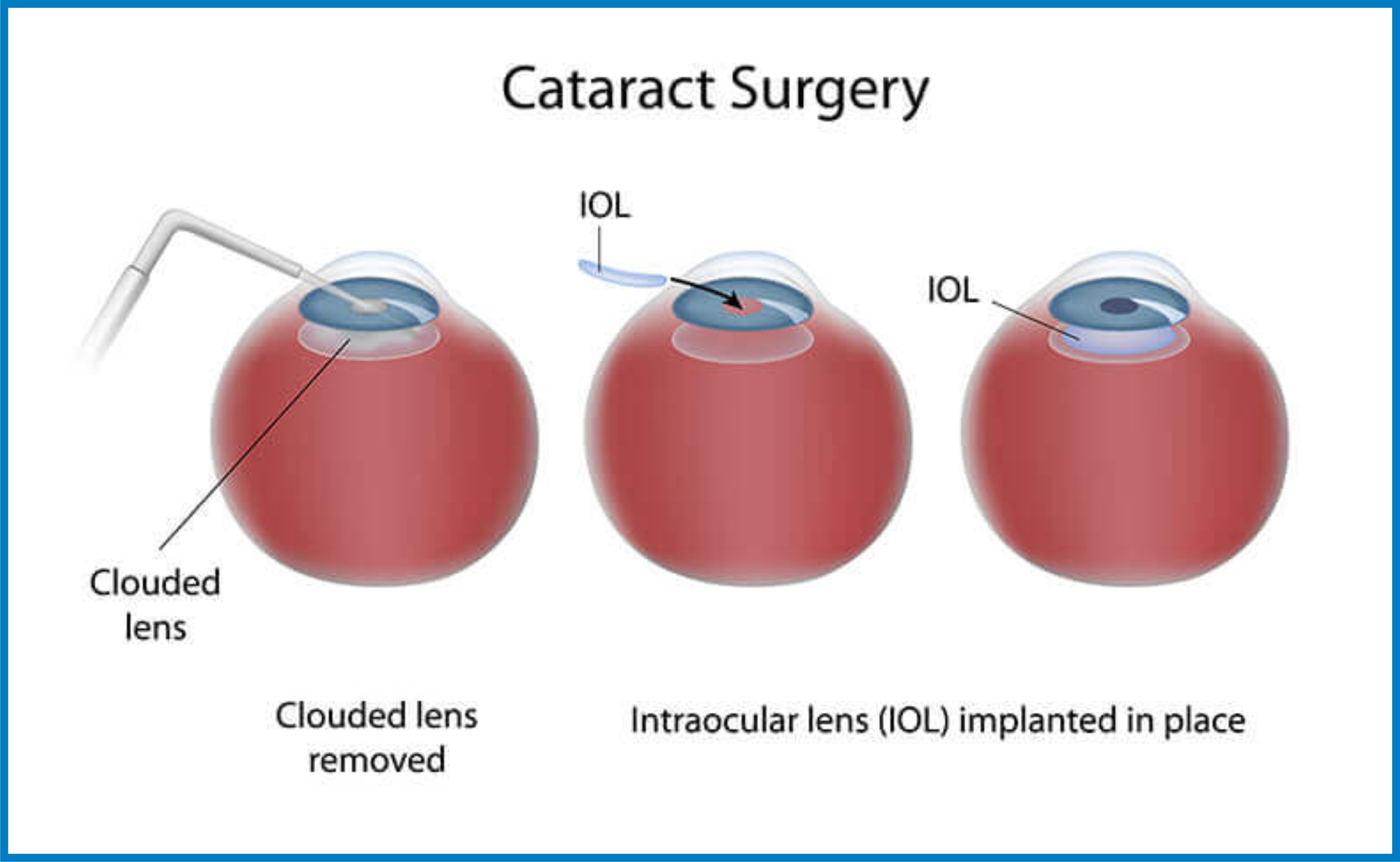
A highly refined surgical technique that uses a small incision (1.8–2.2 mm) to remove the cataract using phacoemulsification (ultrasound-based technology). A foldable intraocular lens (IOL) is implanted in its place.
Benefits:
- Stitch-less, bloodless, and scarless
- Painless and quick (10–15 mins per eye)
- Fast visual recovery
- Minimal risk of infection
2. FLACS – Femtosecond Laser-Assisted Cataract Surgery
This is the most advanced, robotic, bladeless cataract technique. A high-precision femtosecond laser is used to perform critical steps of surgery with accuracy unmatched by manual methods.
Benefits:
- Blade-free incisions for greater precision
- Safer for delicate eyes or advanced cataracts
- Reduces surgical time and energy usage
- Ideal for patients opting for premium IOLs (multifocal, toric, EDOF)
Types of Lenses Used in Cataract Surgery
Cataract surgery is one of the most common and successful eye procedures performed globally. During the surgery, the clouded natural lens of the eye is removed and replaced with an artificial intraocular lens (IOL). The choice of IOL significantly impacts the patient’s visual outcome and overall quality of life post-surgery. With advancements in technology, a wide range of lenses is now available to meet diverse visual needs and lifestyles.
- Monofocal Intraocular Lenses (IOLs)
Overview:
Monofocal lenses are the most commonly used IOLs. They are designed to provide clear vision at a single focal point, typically optimized for distance vision.
Pros:
- High-quality distance vision
- Cost-effective
- Widely available
Cons:
- Reading glasses or bifocals are usually required for near tasks
- Multifocal Intraocular Lenses
Overview:
Multifocal IOLs have multiple zones or rings that allow for vision at varying distances — near, intermediate, and far.
Pros:
- Reduces dependence on glasses
- Ideal for patients with active lifestyles
Cons:
- May cause glare or halos, particularly at night
- Not suitable for individuals with other eye conditions like macular degeneration
- Toric Intraocular Lenses
Overview:
Toric IOLs are specially designed to correct astigmatism along with cataracts.
Pros:
- Provides sharper vision for patients with corneal astigmatism
- Reduces or eliminates the need for glasses for distance vision
Cons:
- Glasses may still be needed for near or intermediate vision
- Extended Depth of Focus (EDOF) Lenses
Overview:
EDOF lenses offer a continuous range of vision, with a particular emphasis on improving intermediate vision, such as for computer work or dashboard viewing.
Pros:
- Reduced glare compared to multifocal lenses
- Good intermediate and some near vision
Cons:
- May not provide sharp near vision like multifocal IOLs
- More expensive than standard lenses
- Accommodative Intraocular Lenses
Overview:
These lenses are designed to move or shift within the eye, mimicking the eye’s natural ability to focus at different distances.
Pros:
- Potential to offer a more natural range of vision
- Fewer visual disturbances compared to multifocal IOLs
Cons:
- Results can vary between individuals
- Less commonly used than monofocal or multifocal lenses
Choosing the Right Lens
Selecting the appropriate IOL depends on several factors, including:
- Lifestyle needs (e.g., frequent reading, screen usage, night driving)
- Pre-existing eye conditions (such as astigmatism or macular degeneration)
- Budget and willingness to use glasses post-surgery
- Surgeon’s recommendation based on the health and structure of the eye
Always consult with your ophthalmologist to determine the best lens option tailored to your specific needs and expectations.
Types of Intraocular Lenses (IOLs)
We provide a broad spectrum of IOLs to meet different lifestyle needs, budget constraints, and optical requirements.
CATARACT PACKAGES FOR ONE EYE
| S. No. | Lens Type & Brand | Lens Features | Surgery Type | Price (₹) |
| 1 | Foldable Lens (BAUSCH & LOMB) | Violet light protection, Monofocal | MICS | 25,500/- |
| Femto Cataract Laser | 65,500/- | |||
| 2 | Foldable Lens (Clareon Alcon / B&L Envista) | UV Protection | MICS | 39,000/- |
| Femto Cataract Laser | 79,000/- | |||
| 3 | Foldable Lens (HOYA NANEX / TECNIS SIMPLICITY – Preloaded) | UV Protection, Premium Monofocal | MICS | 45,000/- |
| Femto Cataract Laser | 85,000/- | |||
| 4 | Foldable Lens (TECNIS Eyhance / RAYNER / Hoya Impress) | UV Protection, Premium Monofocal | MICS | 60,000/- |
| Femto Cataract Laser | 1,00,000/- | |||
| 5 | Trifocal Lens (PANOPTIX ALCON / SYNERGY J&J USA) | UV Protection | MICS | 80,000/- |
| Femto Cataract Laser | 1,20,000/- | |||
| 6 | Trifocal Toric Lens (PANOPTIX ALCON / SYNERGY J&J USA) | UV Protection | MICS | 1,15,000/- |
| Femto Cataract Laser | 1,55,000/- | |||
| 7 | Vivity Lens (ALCON, USA) – Premium Extended Range Vision | UV Protection | MICS | 98,000/- |
| Femto Cataract Laser | 1,38,000/- | |||
| 8 | TORIC Foldable Lens (TECNIS, ALCON, BAUSCH & LOMB) – For Cylindrical Power | UV Protection | MICS | 50,000/- |
| Femto Cataract Laser | 90,000/- |
Premium Monofocal
| S. No. | Lens Type & Brand | Features | Surgery Type | Price (₹) |
| 1 | Foldable Lens – HOYA NANEX / TECNIS SIMPLICITY (Preloaded) | UV Protection, Premium Monofocal | MICS | 45,000/- |
| Femto Cataract Laser | 85,000/- | |||
| 2 | TORIC Foldable (TECNIS, ALCON, BAUSCH & LOMB) | UV Protection, For Cylindrical Power | MICS | 50,000/- |
| Femto Cataract Laser | 90,000/- | |||
| 3 | Foldable Lens – TECNIS Eyhance / RAYNER / Hoya Impress | UV Protection, Premium Monofocal | MICS | 60,000/- |
| Femto Cataract Laser | 1,00,000/- | |||
| 4 | Foldable Lens – TECNIS Eyhance Toric / Rayner Toric | UV Protection, Premium Monofocal | MICS | 75,000/- |
| Femto Cataract Laser | 1,15,000/- |
Premium EDOF & Multifocal
| S. No. | Lens Type & Brand | Features | Surgery Type | Price (₹) |
| 5 | Trifocal Lens – PANOPTIX ALCON / SYNERGY J&J USA | UV Protection | MICS | 80,000/- |
| Femto Cataract Laser | 1,20,000/- | |||
| 6 | Trifocal Toric Lens – PANOPTIX ALCON / SYNERGY J&J USA | UV Protection | MICS | 1,15,000/- |
| Femto Cataract Laser | 1,55,000/- | |||
| 7 | Vivity Lens – ALCON, USA | Premium Extended Range Vision, UV Protection | MICS | 98,000/- |
| Femto Cataract Laser | 1,38,000/- | |||
| 8 | Vivity Toric Lens – ALCON, USA | UV Protection | MICS | 1,30,000/- |
| Femto Cataract Laser | 1,70,000/- | |||
| 9 | TECNIS PURE SEE Lens – J&J, USA | UV Protection | MICS | 1,18,500/- |
| Femto Cataract Laser | 1,58,500/- | |||
| 10 | TECNIS PURE SEE TORIC – J&J, USA | UV Protection | MICS | 1,60,000/- |
| Femto Cataract Laser | 2,00,000/- |
Package Inclusions:
- Cost of Intraocular Lens (IOL)
- Surgeon’s Fees
- Operation Theatre Charges
- Consumables used during surgery
- Valid for one eye surgery
Who Should Choose What?
| Need/Condition | Recommended IOL |
| Basic clear vision, willing to use glasses | Monofocal IOL |
| Active lifestyle, minimal glasses | Multifocal / EDOF IOL |
| Working professionals, screen users | EDOF IOL |
| Astigmatism (cylindrical number) | Toric or Toric Multifocal IOL |
| Driving at night, minimal halos | TECNIS Eyhance / Vivity |
Choosing the Best Eye Hospital in Indore for Cataract Surgery – Rajas Eye Hospital
If you’re experiencing visual issues such as blurred vision, reduced clarity, or sensitivity to light, it’s essential to consult an ophthalmologist promptly. Be open about your symptoms and ask detailed questions to help your doctor understand your condition better.
If you’ve been diagnosed with cataract or suspect its onset, there’s no need to worry. Rajas Eye Hospital, Indore—recognized as one of the most advanced eye care centers in the region—offers world-class treatment and personalized consultation for all eye-related concerns.
We specialize in painless, stitch-less, and bladeless cataract surgeries using the latest IOL (Intraocular Lens) implantation techniques. Our state-of-the-art infrastructure, combined with a team of highly skilled ophthalmologists and support staff, ensures safe and precise treatment outcomes.
Trust Rajas Eye Hospital for expert care, cutting-edge technology, and compassionate service—your vision is our mission.
Top Cataract Surgeons in Indore at Rajas Eye Hospital
Dr. Rajiv Choudhary
MBBS, M.S. (Ophthalmology), PHACO
Retina and Refractive Surgeon
Dr. Jyoti Singhai
Cornea Specialist
M.S. (Ophthalmology)
Consultant – Cornea Services, Rajas Eye Hospital, Indore
Dr. Divya Patel
General Ophthalmologist (नेत्र चिकित्सक)
D.O.M.S, Fellowship in Medical Retina
Dr. Jidnya Shah
General Ophthalmologist
M.B.B.S., D.O.M.S. (Ophthalmology)
Dr. Urvija Choudhary
MBBS, MS (Ophthalmology)
Cataract, Cornea & Refractive Surgeon
Frequently Asked Questions (FAQs) About Cataract Surgery
- What is a cataract?
A cataract is the clouding of the eye’s natural lens, leading to blurry vision, difficulty in seeing at night, and glare sensitivity. It is a common age-related condition but can also occur due to injury, diabetes, or prolonged steroid use.
- When should I consider cataract surgery?
You should consider surgery when your vision begins to interfere with your daily activities such as reading, driving, or recognizing faces. Our experts at Rajas Eye Hospital can help determine the right time after a thorough evaluation.
- Is cataract surgery painful?
No, cataract surgery is generally painless. At Rajas Eye Hospital, we use the latest painless, stitch-less, and bladeless techniques with topical anesthesia to ensure maximum comfort during the procedure.
- How long does cataract surgery take?
The surgery itself usually takes 10 to 15 minutes per eye. However, you should expect to be at the hospital for about 2 to 3 hours for preoperative and postoperative care.
- What type of lenses are implanted during surgery?
We offer a wide range of premium IOLs (Intraocular Lenses) such as monofocal, multifocal, toric, and EDOF lenses. The choice of lens depends on your lifestyle, visual needs, and eye health, which our specialists will discuss with you.
- Will I need glasses after cataract surgery?
Depending on the type of IOL you choose, you may still need glasses for reading or distant vision. Multifocal and advanced lenses can significantly reduce your dependence on glasses.
- Is cataract surgery safe?
Yes, cataract surgery is one of the safest and most commonly performed procedures globally. At Rajas Eye Hospital, we follow stringent safety protocols and use cutting-edge technology to ensure the highest success rates.
- What is the recovery time after cataract surgery?
Most patients notice improved vision within 24 to 48 hours. Complete healing usually takes about 2 to 4 weeks, during which you must follow the post-operative care instructions provided by our team.
- Can cataracts come back after surgery?
No, cataracts do not return once the natural lens is replaced. However, in some cases, a membrane behind the lens may become cloudy over time, which can be easily treated with a quick, painless laser procedure (YAG capsulotomy) at our hospital.
- Why choose Rajas Eye Hospital for cataract surgery in Indore?
Rajas Eye Hospital is a trusted name in eye care, offering advanced cataract treatments, expert ophthalmologists, the latest technology, and personalized patient care. Our commitment is to provide clear vision with compassion and precision.
- How long does it take to recover from cataract surgery?
Recovery is generally quick. Most patients notice an improvement in vision within 24 to 48 hours after surgery. Complete healing typically takes 3 to 4 weeks, during which time you should follow your doctor’s instructions carefully. - When can I return to work?
You can usually return to work within 3 to 5 days, depending on your job. If your work involves strenuous physical activity, dusty environments, or heavy lifting, a longer rest period may be advised. - Will I need to use glasses after surgery?
It depends on the type of intraocular lens (IOL) implanted. With standard monofocal lenses, you may need glasses for reading or distance. Advanced lenses like multifocal or trifocal IOLs can significantly reduce or even eliminate the need for glasses after surgery. - Is there a lens that can give me good clarity for both distance and near vision?
Yes. Premium lenses such as multifocal, trifocal, or EDOF (Extended Depth of Focus) lenses are designed to offer clearer vision at multiple distances, reducing dependence on glasses for most daily tasks. - Can an immature cataract be operated?
Yes, an immature cataract can be operated if it is causing significant visual discomfort or interfering with daily activities. In fact, operating at this stage is often safer and can yield excellent results with faster recovery. - What is the difference between a foldable and a non-foldable lens?
A foldable lens is inserted through a smaller incision and unfolds inside the eye, allowing for faster healing and fewer complications. Non-foldable lenses require a larger incision and are used less commonly now due to advances in technology. - What investigations are required before cataract surgery?
Before the surgery, the following tests are usually performed:
- Eye examination
- Biometry (to measure eye length and power of the lens required)
- Corneal topography
- Retina and optic nerve evaluation
- Blood sugar and blood pressure check (if necessary)
These help ensure the safest and most effective surgical outcome.
Cataract Surgery in Indore – Rajas Eye Hospital
Cataracts are one of the most common causes of vision problems, especially among people over 50. If you are looking for the best cataract surgery in Indore, Rajas Eye Hospital is a trusted name known for advanced treatment, expert surgeons, and world-class care.
Why Choose Rajas Eye Hospital for Cataract Surgery in Indore?
Rajas Eye Hospital is recognized as one of the best hospitals for cataract surgery in Indore, offering modern technology and highly experienced eye specialists. Our team is dedicated to providing safe and painless cataract surgery in Indore with excellent visual outcomes.
Key Features of Cataract Treatment in Indore at Rajas Eye Hospital:
- Advanced Cataract Surgery in Indore using phacoemulsification and laser techniques.
- Skilled cataract specialists in Indore with years of expertise.
- Affordable and transparent cost of cataract surgery in Indore.
- Personalized care for every patient.
- Trusted by thousands of satisfied patients.
Advanced Techniques for Cataract Surgery
At Rajas Eye Hospital, we use the latest phacoemulsification cataract surgery in Indore and laser cataract surgery in Indore, ensuring minimal recovery time and maximum comfort. This modern approach makes surgery safer, quicker, and highly effective.
Meet the Cataract Specialists
Our experienced eye surgeons are among the top eye surgeons in Indore, known for precision and compassionate care. Whether you need a simple lens replacement or advanced treatment, Rajas Eye Hospital ensures the best results.
Cost of Cataract Surgery in Indore
The cost of cataract surgery in Indore depends on the type of lens chosen and the procedure recommended. At Rajas Eye Hospital, we offer affordable packages without compromising on quality.
Why Patients Trust Rajas Eye Hospital
Patients choose Rajas Eye Hospital for cataract treatment in Indore because of our combination of advanced technology, expert doctors, and a patient-first approach. We are proud to be recognized as one of the most trusted eye hospitals in Indore for cataract surgery.
Final Thoughts
If you or your loved one is struggling with cataracts, don’t delay treatment. Book a consultation at Rajas Eye Hospital, the best hospital for cataract surgery in Indore, and experience advanced, safe, and effective vision care.
👉 Call us today to know more about the cost of cataract surgery in Indore and schedule your appointment with the leading cataract specialists in Indore.
